WizardArtsPropaganda@sh.itjust.worksdeleted by creator to Ask Lemmy@lemmy.worldEnglish · 2 months ago

WizardArtsPropaganda@sh.itjust.worksdeleted by creator to Ask Lemmy@lemmy.worldEnglish · 2 months ago
Many countries include ‘Democratic’ or ‘People’s’ in their names, even though they are not democratic and do not serve their people. Examples: Democratic People’s Republic of Korea Lao People’s Democratic Republic People’s Democratic Republic of Algeria Democratic Republic of the Congo And German Democratic Republic (East Side) in 1949–1990. None of these states are democratic, power and wealth are concentrated in the hands of a small ruling elite. Who are they fooling with these names?
You must log in or register to comment.
Same reason nazis put socialist in name but promptly killed off socialists and trade unions.
There was a point where the National Socialist Party was actually socialist. But Hitler and his ilk saw a party with popular momentum, joined it, co-opted it, and betrayed the socialist ideals.

deleted by creator
Yes
Close enough. Fetterman. Sold himself as a hard working everyman, but he’s closer to Kid Rock.
Maybe he got some brain worms from RFK. Democrat in name only (DINO).
That term is kind of meaningless these days.
Nope. There never was. They were always faar right. They from beginning were a nationalist group that despised democracy. Even before hitler joined them
Do you have any evidence for this, because I’ve studied history, and I’ve never read anything that indicated the “socialist” part was anything but a scammy populist virtue signal?
I have no idea where you got this from, but it’s totally false. They were never a socialist party. They had some prominent members who supported strong social programs but that doesn’t make them socialists.

authoritarians employ the double speak because they are liars at the root of their beliefs
like NATO is an occupying army in the countries they have bases and not a defensive cooperative force
ml’s live in an alternate reality cult
Same reason the USA has ‘United’ in its name.
Unrelated. For many intents and purposes the states of the US are in fact united. However the examples in OP are very much not democratic.
it has a united military
And federal government.
With Israel
Or america, it’s just a tiny part of it (and other parts are united too).
Some “americans” are unhappy with the fact it seems 😋
Leg of lamb is a dish where one serves a leg that comes from a lamb. The name does not claim that the entire body of the lamb is served.
Yes but when you say leg of lamb, most people don’t give a shit which leg you’re referring to.
There are multiple sets of states that are united under a single national government and are part of the American continents (Mexico and Brazil, for example) but only one of them claims to be THE United States of America.
Was the USA the first set of “united states”?
In the Americas, and in the modern period yes, but the concept was not totally new. Switzerland was a kind of federal state since 1291: https://en.wikipedia.org/wiki/Federal_Charter_of_1291
The Iroquois had a league of sorts that could arguably be considered a uniting of states, stone age though the tribes may have been.
if you stick strictly to the name “united states” then yes, it’s the first entity to name themselves this. later entities include the united states of belgium but they appear later (1790).
however, the netherlands used the name “united provinces” and “(republic of the seven) united netherlands” from 1588, sooooo I guess it can count if you make your question broad?
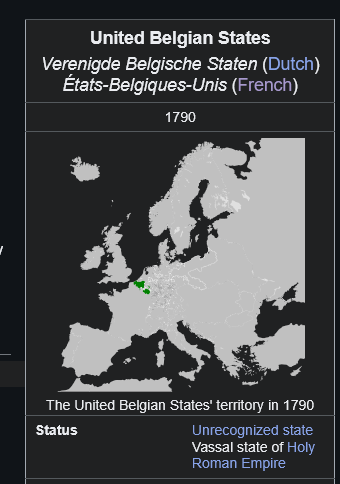
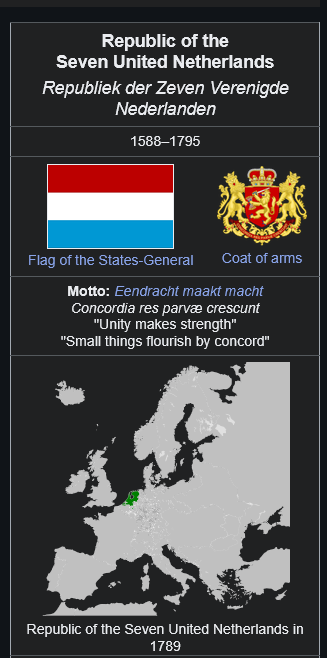
I wonder if the US founders knew about the Netherlands and thus tacked on “Of America”…somehow I doubt it
I suppose it was. Good point.
Come to think of it, what bothers me isn’t our name so much as the attitude of so many of my fellow citizens that the rest of the world is of no consequence. Our name puts a fine point on that narrow world view, regardless of whether it was intended that way.
So yeah, I’d rather see the culture change than the name.
Only one of them IS THE United States of America. That’s how names work.
Nothing anywhere says “There are no other states that are united in any geographic region that you can refer to as ‘America’”. That’s just silly.
For example: Mexico is Estados Unidos. I like how they actually refer to the US as EEUU to differentiate. See? It works. You can make things work.
“Of” being the operative part of the name. United States OF America. Derivative of the land name given by the European explorers. While it’s incorrect to just say “America,” you’d probably just be considered annoying if you went around reminding people or pretending not to get it.
While it’s incorrect to just say “America,”
No. It is not incorrect. It is simply that “America” can refer to the USA, or it can refer to a continent if you consider NA/SA to be a single continent. Similarly, “Georgia” is a US state but also a country.
Sure, no one means that when they say it though
Removed by mod
Watch (edit: some) Americans get angry when you ask
- “you mean the united states of Mexico?”
- "no, NORTH America!
- “so, Mexico?”
- … 😠😡🔥
If I said “estados unidos” it would be fair to assume Mexico. You’re just being belligerent because it’s currently acceptable to be openly bigoted toward Americans.
You’re just being belligerent because it’s currently acceptable to be openly bigoted toward Americans.
I can be belligerent with or without USians present.
I don’t know what you mean by currently, but I have been critical of US American exceptionalism for a long time. And that includes feeling attacked when someone says “there’s more united states than just the USA”.
I don’t think calling me bigoted is applicable here.
And people downvoting me and even feeling the need to berate me kinda proves the point of my previous comment.“Me intentionally being an asshole and getting asshole reactions means the other people are assholes”
Yeah ok bud, you’re pretty bad at manipulating people but good try.
“bigoted towards Americans” is the funniest shit
I gave you an upvote because while i’m USian, I firmly believe that “American” is a proper term for people of the United States of America.
I also am fine with the folks (mostly Brazilians in my experience) who want to use “American” to refer to people of the Americas (or the continent of America for those that consider it a single continent).
Both work fine.
It’s usually pretty darn clear from context which is meant, just like with Georgia (a US state and the English name for a country).
It’s always clear from context. In English “American” means a denizen of the USA. Spanish and Portugese have different words for that.
You sound like you think you’re disagreeing? Because we agree
Just not leaving wiggle room for contrarians.
OH yeah? Wanna bet? I’m a contrarian and I have LOTS of wiggle room.
Just sayin’.
(Just being silly because I have long described myself as a contrarian and so rarely find anyone who knows the word, so it’s quite pleasant and gave me a warm fuzzy feeling. lol)
Hey get this, evil people lie. On purpose
If they were obviously democratic, like e.g. Denmark, then there would be need to them to lie about it in their name.
So it actually makes sense that non-democratic countries are more likely yo have a name claiming to be democratic.
War is peace. Freedom is slavery. Ignorance is strength.
Empathy is weakness.
Hello Elmo, nice of you to join the conversation
This is the big one right now.
Some have “United”.
Oh, they were “united”, under.
And “States” when some are barely
Removed by mod
Love it when someone asks why socialists do something, then reject the socialists’ own explanation for the capitalist propaganda explanation.
You shouldn’t be getting downvoted, you are literally just explaining the differences in how democracy is viewed by socialists.
It’s getting downvoted for being AI slop (which the author has since admitted to)
I didn’t downvote, but some might have done due to the obvious AI writing style
It’s not getting rejected for being different, it’s getting rejected for being logically unsound
Your lack of knowledge of how socialist governments function does not make them illogical.
Ah yes I figure that one party states are very democratic. You couldn’t have more than one communist party, everyone knows that.
You know what a joke you tankies some like right?
good counterargument, the logic makes sense now
“I still don’t get it therefore your argument was bad” lol
Still saying nothing I see.
Which one of those governments do identify as socialist?
ML is mostly authoritarianism with a smidgen of communist cosplay. It should be called stalinism ihmo, but I think the ‘Democratic’ is similarly applied, as a front that hides the actual fact.
Lol, imagine just straight up repeating lies from the Nazis who joined the CIA after the war and thinking you’re supporting Democracy against Authoritarianism…
I’m begging you to learn something.
Thank you comrade Deepseek o7
Fair enough, you caught me. Did do some edits but the explanation Qwen gave was way better then anything I could’ve put together, and IMO better then a lot of the other responses here that didn’t give the other side and just gave the western liberal consensus view it gave at the bottom.
It’s called being a “Meat Proxy” and is fast becoming one of the most obnoxious things you can do online. Stop doing it. If I wanted an LLM’s answer I would ask an LLM. You’re not helping.
you’re not helping
Idk see plenty of people saying it’s a good explanation and got a decent amount of upvotes and some good discussions, seemed like it helped the thread to me, which was fairly one sided on the other responses.
If an explanation is good and helps the discussion then why does it matter where it came from? This is from my local model too so there’s no concern about water usage or giving open AI money too. I
f anything it’s better I post it here so everyone can see it as opposed to some people being unsatisfied with the liberal answer and asking Claude themselves, burning more tokens, water etc. for a bunch of people asking the same question.
Because this isn’t supposed to be repository of knowledge, it’s a social place for humans to talk to other humans. You might think it helped with a specific question, but long term you’re poisoning the well, and setting a norm where trust is eroded even further.
The fact that you didn’t initially flag it up as being a clanker until you were called on it shows that you know deep down that it’s not classy.
Deploying a low-effort AI to provide “balance” to Lemmy is not your responsibility, and not something anyone would vote for if given the option. AI output is like farts; people only like the smell of their own. If you couldn’t bothered writing it, then how disrespectful is it to waste other people’s time expecting them to read it?
So I repeat: cut it out, nobody wants Lemmy to be a place where you ask a question and some lazy-ass meat proxy who lacks the intellect or patience to do their own writing, passes it over to an LLM.
Because this isn’t supposed to be repository of knowledge, it’s a social place for humans to talk to other humans.
It can be both, there’s plenty of people posting links to external sources on here. Like if someone posts an article, they aren’t necessarily trying to engage in conversation, they’re just trying to get the knowledge of that article out.
Yeah a lot of stuff on here is more about sharing opinions, and I’m not going to post an AI response to a “what’s your favorite pizza topping thread” but threads like this where it’s more of a matter of fact then one of opinion, AI is fine if it gets the fact right.
you’re poisoning the well, and setting a norm where trust is eroded even further.
You can still trust me because I read the response and made sure that it matched my understanding of the subject. I take full responsibility for the post and if it’s wrong then someone is right to call me out, and I take responsibility for defending it. But no one is calling me out for the facts of the post, only you are getting mad at the origin.
AI output is like farts; people only like the smell of their own. If you couldn’t bothered writing it, then how disrespectful is it to waste other people’s time expecting them to read it?
If this were true then nobody would’ve upvoted it and there would be a bunch of comments calling it low quality slop. Hell the fact a post like this didn’t get hate either from the liberals or the MLs on a topic like this shows it’s quality and nuance
It is the best explanation I read so far. AI seems to be generally good at explaining stuff.
Could be, but the post history doesn’t look genAI to me. (I am no expert in detecting genAI output, tho.)
thanks for the explanation
These states claim genuine “people’s democracy” precisely because it excludes bourgeois parties and concentrates power to defend workers’ interests against capitalist restoration
This makes zero sense. If power is concentrated, then it doesn’t represent workers interests. If it represented all workers interests, then power would be diffused.
How are these one-party governments, gauging the interests of their workers? How are they doing this without democracy and voting? Afaik these countries don’t even ask their citizens for feedback
This makes zero sense. If power is concentrated, then it doesn’t represent workers interests. If it represented all workers interests, then power would be diffused.
The person you’re responding to’s description is slightly wrong. A “People’s Republic” defines a Socialist state who’s government is made up of an alliance of parties, rather than a single communist party, and that United front government might have parties intended to represent sections of the national bourgeoisie. So there’s a nominal Power sharing element here.
That said, I’m not sure how it logically follows that a state which represents the interests of workers must therefore be decentralized in some way? These places often end up with centralized political systems (though the list of States OP gave is full of a whole lot of variety in their institutions and political cultures), because of outside influence.
The DPRK is like that because some white guys drew a line across a country, and them bombed it until pilots complained there were no more targets to bomb, and civilians began living in caves. The DPRK (and the ROK for that matter lbr) has been something of a basket case ever since. But that’s because power centralization is a response to material conditions, not a result of what someone named the country.
How are these one-party governments, gauging the interests of their workers? How are they doing this without democracy and voting? Afaik these countries don’t even ask their citizens for feedback
People’s Democracies are defined by the presence of multi-party systems, like I explained earlier. Though these secondary, non-Socialist, parties have greater or lesser degrees of importance depending on what country we’re discussing.
That said, there are all kinds of institutions by which a people’s democracy gauges the interests and feedback of the workers and other represented classes.
I’m going to talk about China, even though it wasn’t referenced in the OP, because it’s a People’s Republic, and I can speak to its institutions with the most confidence:
One way class interests are gauged by the state is through the party system. This doesn’t matter so much in the primary legislature, the National People’s Congress, because the allied parties have a small fraction of the seats, but the NPC is historically a rubber stamp for the much more vibrant, body, The Chinese People’s Political Consultative Conference (where the communist party only has 97 seats out of 2,169), where various sectors of society are represented, including parties, ethic and religious groups, organisations in the arts and sciences, mass organizations that represent women or young people, trade unions, etc.
In all state owned enterprises as well as in large parts of the private sector, there are a network of Workers Congresses which allow workers to engage in firm management.
There are also Party Committees in many workplaces, where the communist party itself plays a role in firm governance. These institutions make sure private companies follow the five year plans set out by the state.
There are also trade unions, which represent workers interests in other ways, and have representation in government.
There are also an extensive amount of Worker, Consumer, and Agricultural Cooperatives in China you might find this interesting, as it speaks to your concerns about decentralization. Between State Owned Enterprises, and the private sector that the state is always trying to reign in, co-ops straddle the line between these, by being worker owner and run firms, more independent of state power, and not beholden to the interests of capital like a private corporation.
People are often (sometimes rightly) critical of the privatization of the Reform and Opening up period. But that capital inflow has allowed China to turn around and invest in a domestic cooperative sector that rivals private capital. Huawei is the largest telecoms company in the world, for instance, and it is a worker co-op.
So there are lots of ways that’s workers interests are guaged and turned into an economic plan that will benefit them. Obviously, these institutions have been more or less effective at different times, or in different parts of the country. And a the Chinese system isn’t universal (The DPRK or former East Germany looked a fair bit different to this. While modern Vietnam or Laos modeled a lot of their own reforms off of China), but hopefully it gives you some insight.
There’s another comment in this discussion that talks about how the closest Chinese word for “people’s republic” is 民主 and means government which works for the benefit of the people. So their definition includes a benevolent dictator.
And that seems to align with what you’ve said too. Sure, there may be commissions for gauging the interests of the people. There may be co-ops. But ultimately the CCP holds all power. They can dissolve the commissions if they want to. They can take over the co-ops if they want to. If the people make demands or raise complaints, the CCP can just ignore them.
I think China is unquestionably lucky that the CCP does seem to actually care about the people. But this amount of authoritarianism does not seem to work as well in many other countries.
And if you genuinely think that what North Korea has right now is the best they can do for their people (even despite the turmoil caused by other countries), then we’ll just have to agree to disagree.
There’s another comment in this discussion that talks about how the closest Chinese word for “people’s republic” is 民主 and means government which works for the benefit of the people. So their definition includes a benevolent dictator.
I mean, I guess? I don’t know enough Mandarin to speak on that.
And that seems to align with what you’ve said too. Sure, there may be commissions for gauging the interests of the people. There may be co-ops. But ultimately the CCP holds all power. They can dissolve the commissions if they want to. They can take over the co-ops if they want to. If the people make demands or raise complaints, the CCP can just ignore them.
I think China is unquestionably lucky that the CCP does seem to actually care about the people. But this amount of authoritarianism does not seem to work as well in many other countries.
Look, I’m not trying to argue with you. I’m just answering your questions, and explaining to you what those institutions look like in China. You’re more than welcome to do your own research and come to your own conclusion, but I think you should go into it with a sense of curiosity about the world, rather than trying to get in sick dunks on the internet.
the CCP does seem to actually care about the people
And look, I have my qualms about China’s system too. But they eliminated absolute poverty. Tf are you talking about?
And if you genuinely think that what North Korea has right now is the best they can do for their people (even despite the turmoil caused by other countries), then we’ll just have to agree to disagree.
I mean, the DPRK’s ongoing 20x10 regional development policy is using its new influx of Chinese and Russian capital to improve economic development and living standards outside of Pyongyang. So that’s certainly an improvement.
But that can only to so far when the Korean war never ended. If you actually care about the wellbeing of the Korean peninsula, you’d want the war to end, the US to leave and lift all sanctions, and for there to be an internationally mediated peace negotiation that would decide what peaceful future between North and South Korea might look like. Perhaps an EU style arrangement with open borders between the two countries, and shared economic interests, while each gets to retain their respective political and economic systems, as they see fit.
I’m an ardent socialist. I think the cult of personality around the Kim’s is weird and unhelpful. But my opinion is meaningless in the face of the material reasons why that personality cult exists, and the material solutions that need to be implemented in order to bring peace and prosperity to the Korean peninsula.
And I’m simply sharing what I’ve learned from my research on the subject. Not entirely a direct response to your comment, sure, but relevant enough that I felt like sharing, not just to you but other readers.
you’d want the war to end, the US to leave and lift all sanctions, and for there to be an internationally mediated peace negotiation that would decide what peaceful future between North and South Korea might look like.
Or Kim could give up power and reform the government to a more western style of democracy. That would naturally end the war as well, and probably improve relations with South Korea considerably.
If pressure on North Korea is released, there’s no telling if the authoritarian government would change their ways at all. In fact that pressure might be necessary to push them to change.
Ah yes, just like all the other countries that democratically voted for their own people’s interests. Those were all totally left alone by the US.
Or Kim could give up power and reform the government to a more western style of democracy.
You mean like America, which invaded and destroyed 80% of Korean infrastructure and killed over 3 million civilians? That kind of western democracy? You are the exact same type of chauvinist that caused the Korean war in the first place.
Or Kim could give up power and reform the government to a more western style of democracy. That would naturally end the war as well, and probably improve relations with South Korea considerably.
This misunderstands International Relations. You can’t negotiate a settlement like this by going to one of the parties and telling them to give up everything. That’s simply a non starter. Part of negotiating a peace like this, requires guarantees that each side will get to retain a degree of sovereignty in the peace (in this case, their political and economic systems), and that concessions made by either side will be beneficial for both parties in the long term (in my previous example, this might be something like giving up border controls between the two countries to facilitate trade, travel, etc, in a Shengen-style arrangement. Or unifying under a single currency).
Further, why would that “naturally end the war” South Korea isn’t at war with North Korea because the north is a dictatorship or something. South Korea has been a dictatorship for much of its post war history. Then continuation of the Korean war has more to do with US interests in the region, than anything else at this point. Eliminating the US presence is the keystone to any meaningful peace mediation.
If pressure on North Korea is released, there’s no telling if the authoritarian government would change their ways at all. In fact that pressure might be necessary to push them to change
That pressure has been on them for 76 years. It clearly isn’t going to change anything.
If they’re opened up to the world, they’re actually incentivized to engage on the global market. We have a very clear cut case study here:
If we compare the DPRK to Vietnam, the former is a country chopped in half, diplomaticlly isolated, sanctioned to hell and back, and locked in a forever war. Of course it looks the way that it does.
But compared to Vietnam, a country which was also chopped in half by the US, under similar circumstances and eventually unified, it didn’t develop the same kinds of power centralization as the DPRK. Vietnam today is a modern, cosmopolitan, Socialist country that’s highly integrated into the world system.
How are these one-party governments, gauging the interests of their workers?
https://en.prolewiki.org/wiki/Library:Soviet_Democracy
How are they doing this without democracy and voting?
They do have democracy and voting and the actions of their government are far more aligned with the expressed will of their people than any Liberal Democracy (which are all just Oligarchies with a veneer of democracy).
https://act.represent.us/sign/usa-oligarchy-research-explained
The first link above is for the USSR, but the soviet (small ‘s’) form of democracy has been used by many communist democracies that the West decries as authoritarian helholes (which generally just means they refuse to bow to the international capitalist order).
The second is for the US but the only difference of you did the same research for any Liberal Democracy would be a question of degree not of substance.
North Korea has democracy and voting? That’s news to me. They definitely don’t have very much. So you don’t think North Korea is authoritarian?
North Korea has a really fucking weird political system but luckily it is not the only country that calls itself socialist. The USA are also undemocratic but you don’t seem to judge all parliamentary “democracies” by one especially bad example
I think “authoritarian” is a meaningless designation that only really means “geopolitical adversary of the current hegemon”.
The term came into common usage during the Cold War as a way of conflating communist countries with fascist ones in the minds of Western Liberals.
Authoritarian simply indicates how much power the government has. There’s not a perfectly precise boundary, but you’d have to be crazy to say North Korea has the same degree as France. This sort of “all sides” argument is reductive and problematic.
The DPRK doesn’t put people in prison for having weed and does put people in prison for exploiting other citizens. Both governments have near absolute power, the main difference is how that power is used.
Every state is Authoritarian by that soft definition. That just leaves the question of who weilds the authority and who benefits from it.
The “reductive and problematic” argument here is the pro-fascist talking point that the dictatorship of capital is freedom and anything else is “authoritarian”.
If there is no reasonable way for a citizen (as in, somebody not currently part of the government) in the DPRK to influence the laws, then that is what makes it authoritarian. It’s about governance not capital.
The DPRK absolutely puts people in prison for having weed, are you a teenager trying to be contrarian? Every time you MLs talk you just turn more people off to socialism.
Meanwhile weed is legal in my state, despite the US federal government having “absolute power” according to you.
.https://koryogroup.com/travel-guide/faq-is-marijuana-legal-in-north-korea
Virtually every country in the world has some form of elections, outside of a handful of literal monarchies like Saudi Arabia and Qatar. What’s more debatable is how legitimate they are and which metrics we use to evaluate that.
Often a country is considered undemocratic if it doesn’t allow international observers, but of course that requires a degree of trust, as it gives those observers the power to delegitimize the elections. Furthermore, the idea that observers from country A would be legitimate and that country B should be expected to let them in already carries a whole bunch of presumptions about which countries are and are not democratic, which winds up being circular. The US, for example, is never expected to invite international observers to legitimize it’s elections.
If you really stop and think critically about how to evaluate elections from the outside, without just assuming the answer based on vibes and presumptions, it’s a very challenging and complicated question. An American may take it as a given that China isn’t democratic while their system is, but a Chinese person could easily feel the opposite. Without establishing clear metrics, it would be impossible to evaluate who is correct from a neutral and objective standpoint. Even if a metric is agreed on, people might have different assessments based on looking at different information.
Personally, when possible I prefer to avoid arguing over it when possible because without establishing a metric it’s impossible to discuss productively, and if you try to establish a clear metric, people will just immediately call you a tankie or red fascist because of course everyone knows bad country is bad, and how dare you try to examine things from a neutral point of view instead of agreeing with what “everyone” already “knows.” I’ve also found that it’s better not to talk shit about random countries I’ve never been to and which don’t really affect my life in any meaningful way.
Having said that, if you’re actually interested in learning more about the subject in good faith, you might be interested in this Luna Oi video where she discusses how the government of Vietnam actually functions and collects feedback from regular people, or the one where she describes how elections work.
Luna’s videos have been so informative and interesting. Honestly they kind of make me want to go to Vietnam someday.
This sounds like a great way to erase the definitions of all words. Most times when we use words, we understand that rarely anything is absolute. For example, we call western nations capitalist even though they all have some degree of socialism. Just because there aren’t clearly defined lines, doesn’t mean that all words lose meaning.
The fact that some nations have opaque elections, is actually a strong sign that they are authoritarian. Because suppression of information is authoritarian.
When the US refuses to invite Chinese election observers to oversee it’s elections, is that “suppression of information?” That’s nonsense.
The reason that a country wouldn’t invite observers isn’t that they’re trying to suppress information, it’s that they don’t want to give another country the authority to delegitimize them.
What’s actually far more authoritarian is this idea that every country in the world needs to bend the knee and allow the West to come into their country and declare whether they are a legitimate democracy or not.
Suppose there’s a country that’s a legitimate democracy, but they have such valuable and plentiful natural resources that any major power they invited in would seek to delegitimize them in order to seize control of said resources. Because you assume that they’re “authoritarian” for not inviting in a major power to oversee their elections, you are ruling out the possibility that such a state could exist.
What this means in practice is that you’re giving the West a justification for aggression towards any country on the planet. If they refuse to invite observers, they must be authoritarian and illegitimate, but if they do invite observers, then those observers can simply declare the government illegitimate anyway.
What that works out to in practice is nothing short of chauvanism, imperialism, and world domination. It isn’t a real, objective metric, because it’s only obfuscating the real metric which is just how well a country gets along with the West. A country being on bad terms with the West does not definitionally make it undemocratic, but by your standards it would be.
Opaque elections are a sign for information supression, but not the only sign.
However if I wanted North Korea to be considered democratic, I would first ask that voting be implemented such that voters can’t be identified and punished for voting against a candidate (source)
This is a great explanation
I feel like I sense AI but it is stl pretty informative
Just because it’s a well-written answer doesn’t automatically mean it’s AI. There’s a couple syntax errors/typos in there that lead me to believe that at the very least it wasn’t JUST a straight up copy/paste from ChatGPT
deleted by creator
Bro I use double dashes all the time–often to make little asides like I’m doing right now–and have been using them for years. It was just something I picked up by reading actual books. Now AI comes around and I’ll occasionally be falsely accused as one just because of that one small aspect of my writing style. Feels bad man
It’s a good time to drop them anyway, since it’s usually a sign that you rushed into a sentence without a proper plan. Come to think of it that’s probably why they’re so commonly used by the next-token prediction calculators…
deleted by creator
I had to scroll to far to see the actual answer. I get that people hate the answer, but this is the answer.
Is there much scholarly debate on the validity of these opposing definitions? It seems like it’d be difficult to support an argument that the Marxist-Leninist style governments support the working class more than a procedural democracy.
Most of the time they don’t, but In certain cases they can. Yeah obviously North Korea is worse for workers then south korea. But if you look at the current governments of the two superpowers it becomes more contested.
If you look at the government of Xi jinping and the government of Trump, who would you say represents the interests of their people more? Who has higher approval rating in their country, hell who has a higher approval rating globally? Who is enacting more policies that help the people?
Faith in the governments of liberal democracies is near a historic low, people now more then any time since the 30s don’t think the government they voted for represents them. It’s to the point where even the government of Cuba has a higher approval rating then the US government. You could chalk that up to propaganda, but you could probably chalk up the remaining 30% approval of Trump to Fox News propaganda as well.
This isn’t to say I’m in favor of getting rid of procedural democracy, it more often represents the will of the people more then one party states. Just saying it doesn’t always and it’s getting worse at it.
Totally agree that the current US government is shit and getting worse and ultimately it is due to weaknesses in the way the procedural democracy was setup.
To me that fact can be viewed as a fixable design flaw. A Marxist-Leninist system (as far as I understand it) at its root doesn’t seem like a better way to prevent corruption or power grabbing since there’s no built in checks at all. You’re simply relying on the good intentions of the ruling party which, as we’ve seen from all governments, change over time and can be influenced in many ways.
The more corrupt the leaders of a country are, the harder they protest that the country is anything but.
This, by the way, applies not just to in the name of the country explicitly including an ideal, but also to harping on, and on, and on about how the country is such a great beacon of an ideal (like they do in the US and UK about being Democratic all the while having First Past The Post voting systems).
I would say that the general rule (applied to people in all situations, not just in politics) is that if you feel the need to constantly state or imply that you or your group have some great quality, you don’t have it.
You can just say whatever you want, words dont mean anything and people will just go with it. Its just marketing
“The free paradise of people’s democratic empire of happy humans™®”
Yep. Liars gonna lie
It’s a reflection of the state’s earlier aspirations—the justification it used to overthrow the preceding authoritarian state.
The problem is, the more drastic the social and political changes are that the new regime is trying to enact—and the more entrenched the preceding regime was—the more tempting it is to lean on authoritarian vanguardist methods to cut through the pushback. But once they start down that path, the means inevitably become the ends and everything winds up back where it started.
Nothing about this is inevitable, use of force does not magically obligated one to continue using force or to use it inappropriately, wielding authority does not magically corrupt people, these are the direct result of material conditions and different conditions can and do have different results
State-scale institutions are always conglomerations of adaptive subsystems (or quickly become so, if they’re not completely dysfunctional). This institutional ecosystem selects for subsystems that use state institutions to perpetuate themselves—and its these systems, not the individuals within them, that increasingly evolve to exploit the state’s authoritarian powers.
Cool story
This is deep man
same reason america espouses freedom but then has 304830483048 laws that restrict every possible thing you can do other than go to work.
Its true when you see some legislation with freedom in the title you know they are about to take someones freedoms away.
Authoritarians love nothing more than to deny others the correct language to make progress and to write history.
They’re fraudsters.
I can’t speak for all nations but the Democratic Republic of the Congo was an actual democratic republic when it was named.
But it was too socialist for the US, who intervened with military force, executed the elected leader and installed a puppet dictator that was loyal to US corporate interests.
Looking it up now, Congo has removed Democratic from its name but still calls itself a Republic. A unitary executive appoints ministers, and a prime minister leads parliament. It does have multi-party elections, but, to quote Wikipedia, opposition parties are allowed, but are widely considered to have no chance of gaining power.
The current leader, Sassou Nguesso, is trying to change constitutional law so he can run another term.
Actually, the Democratic Republic of the Congo and the Republic of the Congo are two separate countries that border each other.

Edit: Just to add to the confusion, there used to be more Republic of the Congos.
Looking it up now, Congo has removed Democratic from its name but still calls itself a Republic.
There’s two countries called congo, the democratic Republic of Congo and Republic of Congo. Both still exist today, there was no name change.
Can’t believe you’d ask this question and leave out the People’s Republic of China.
Tbf I’m not excusing the CCP but they seem to be a lot better about practicing democracy / voting in council and ability to advance in politics than the others on the list, as long as your Han Chinese. Still authoritarian though.
I’m Chinese. There is a difference between what Chinese people call democracy and what traditional Western political philosophy calls democracy.
In China, democracy (民主) means government which works for the benefit of the people.
As it is defined in Western political philosophy, democracy means that the people can control the composition and decisions of their government.
This means that a benevolent dictatorship which furthers the interest of the people qualifies as democratic under the Chinese definition, even though it obviously wouldn’t in the Western definition. Conversely, a government which works only for the upper class and a select elite isn’t democratic under the Chinese definition, but it could be under the Western one as long as it had free and fair elections.
Nowhere is this clash in definitions more apparent than in Hong Kong. For one, the city has had a taste of democracy in the Western sense through the limited elections it had during British colonial rule. On the other hand, China doesn’t see free and fair elections as particularly necessary to achieve its vision of democracy. The government is democratic as long as it does what the people want, in the view of Chinese political thought. Of course, the Western-educated Hongkongers would beg to differ.
This is just a sidenote, but the Communist Party is extremely popular in China. I believe that even if they opened the elections to people of any party and then contested them under a 100% fair electoral system with no voter suppression, nor use of security forces to intimidate opposition, I think the Communists would still win in a landslide if elections were held next month.
Getting a bit off-topic, but I also wanted to take the time here to talk about the mandate of heaven (天命), an old concept of Chinese political philosophy. I think it’s a good precursor to the modern Chinese understanding of democracy and the legitimacy of governments.
The mandate of heaven is a concept that was invented to explain why imperial dynasties rise and fall. It essentially states that a dynasty has divine favour and a mandate to rule if it rules in a manner that is fair and just, and benefits the people. When a dynasty becomes corrupt and unjust in its rule, the mandate of heaven will be withdrawn and the people will revolt against it, and a new dynasty will rise up and replace it.
The concept is inherently steeped in traditional Chinese religious practices and beliefs which mostly are no longer relevant today. But I think that the mandate of heaven is nothing more than a religious way of spelling out the concept of popular sovereignty. When a dynasty rules for the benefit of the people, it enjoys the mandate from heaven. In modern political thought, we understand that a government instead derives from the people directly. But other than that, it’s the same thing.
The Communist Party claimed its mandate during the Chinese Civil War when it overthrew the old dynasty (Chiang Kai-Shek) and established a new one (Mao Zedong). And as long as it continues to enjoy popular support, it has that mandate to rule. I do note that notwithstanding all of this text, both men would have found it insulting to be referred to as the leaders of a dynasty. But what was then called a dynasty is now called a republic. The fact that the post of chief of state, be it emperor, president, or general secretary, is no longer hereditary, has no bearing on the fundamental nature of it.
benevolent dictatorship which furthers the interest of the people qualifies as democratic under the Chinese definition
The government is democratic as long as it does what the people want
How does the dictator gauge the interests of the people, without democracy or voting? It’s not like the CCP sends people surveys asking for feedback right?
You can suggest things to your local Party members, that get brought up in local meetings. Then eventually these might make their way into the ear of some higher-level officials with the power to make it happen.
Or, you call a hotline and complain about something. A bureaucrat then gets working on it. The national hotline is 12345 to complain about things that aren’t working.
Or you post on social media and eventually, if the post becomes popular, Party officials see it and take action.
Didn’t Jack Ma complain on social media and then get taken away by the government?
Just so we are clear, I was being tongue-in-cheek
the Communist Party is extremely popular in China
Under economic prosperity. I wonder if the same will be true when the one party starts making bad decisions.
deleted by creator
In China, they still of course describe it in broad strokes as political power belonging to the people. But when one presses deeper into it, it becomes apparent that unlike in Western liberal democracies where people can exercise that power through elections, Chinese people can’t. So they instead say things like, “Well, we have people’s democracy here, it works differently”.
Here’s a video I found which was on top of the Baidu Baike (百度百科) article on 民主: https://baike.baidu.com/video?collectionId=0&from=lemma&fromIndex=0&fromModule=lemma_top&fromPage=lemmaTop&isSensitive=0&lemmaId=291141&nid=15108339075742377209
It discusses the differences between Western electoral democracy and Chinese democracy, and the perceived shortcomings of the former.
I found his explanation of democracy in China to be reflective of fairly typical views of how people think China is a democratic country. And he uses the term 人民民主 (“people’s democracy”, to any non-Chinese reading this) to describe it. His examples are a farmer suggesting a welfare policy that is adopted by the Party and a food delivery driver calling the 12345 complaint hotline to get signposts replaced. To a Western viewer these are nonsensical examples of democracy; they’re basic examples of the government responding to people’s demands for public services. But apparently because Chinese democracy works this way, that makes it the “most effective, most genuine, most functional” form of “socialist democracy”.
Thanks for sharing what you know, it’s a refreshing perspective to learn from
Do you know of any historians on the revolution to modern-day china that you’d recommend?
It sounds like that Chinese phrase is better translated as “republic”, then, as the definition you give is almost exactly equivalent. Republic and democracy aren’t synonymous in western political thought, although they’re often linked and conflated.
Removed by mod
民主 comes from Classical Chinese, where it originally meant “ruler” (of a people). It was repurposed I believe in the late Qing or early republican era to mean “democracy”.
民 means “people”, i.e. the population, the public. 主 means “host”, “owner”, or “master”. So while 民主 originally combined those to mean one who was the master of the people, it now is interpreted to mean the state of affairs where the people are the masters.
There is a related term, 民權, “popular sovereignty”, and also sometimes is translated to “democracy”, but it has a subtly different meaning than 民主. It comes from 民 (“people”, as before) and 權 (“power”, “right”, “authority”). Wiktionary doesn’t have the etymology, but I’m guessing it’s possibly a calque of Ancient Greek δημοκρατία (δῆμος, “people” + κράτος, “power”), possibly through one of the many European language words for democracy which derive from that, done during the late Imperial era, which is when many modern Chinese political terms were coined.
Well, that’s some blatant racism. Fascinating that Lemmy is a refuge for that. Political opponents of China, clean up your yard!
Maybe people in China would know the true definition of democracy if their “benevolent” government didn’t block Wikipedia.
Chinese people know what Westerners call democracy. And they know it’s not exactly the same as what they call “民主”. But they don’t have a word for it. Just like English doesn’t really have a word to describe what Chinese people call “民主”. I think it’s unfair to translate that term as “democracy”, as someone who speaks both Standard Mandarin Chinese and English, though neither are technically my native tongue.
If I were to coin a new term to describe it, the best I could do is “benevolent government”. But then people just accuse me of Orientalism.
And I do mean it when I say that Chinese people truly believe (whether that is a product of propaganda or not is a topic of a different discussion) that their system is superior to Western liberal democracy. For what it’s worth, I don’t agree. Living in a country that practices Western democracy doesn’t prevent people from voting in a government that does what they want, as the Communist Party reportedly does. But it does give you a choice in the event that it goes sour. And the Chinese people, as it currently stands, are kind of just relying on the Party to keep doing things that are good and popular. That’s not guaranteed to always be the case, and they can’t really do anything about it if it stops being that way.
You have a very good and friendly way of explaining these things.
deleted by creator
as long as your Han Chinese.
Yeah? As long as your Han Chinese does what?
(it’s “you’re” but I’m being silly and playing with what you wrote, not attempting to correct you. I can’t resist playing with typos)
Boy wait until you find out the “Patriot Act” was actually about the government spying on you. It’s like politics 101 to give things names that aren’t at all related, but sound good.
And what does it have to do with the subject of the post? How does it help the OP?
The subject of the post is "why do authoritarian states have words like ‘democratic’ or ‘people’s’ when they are not actually democratic or for people? Yes? Would you agree with that?
Politics 101 is giving something a name that does not relate to the actual political thing you are doing. Naming a party, passing a bill, etc. The patriot act was an example i had off the top of my head.
Thought the connection was incredibly clear but I guess not.
Oh, it’s very clear. But you need to ask that type of question to drive engagement and feed the echo chambers. How else can users feel morally superior? And it’s far easier for users to respond than to actually do.
I’ll just go ahead and answer your question.
The Patriot Act has absolutely nothing to do with patriotism. In practice, it expanded government surveillance and law-enforcement powers in ways that raised serious constitutional, civil-liberties, and human-rights concerns.
It was called the Patriot Act because that’s an appealing name. Nobody is going to call something the Government Surveillance and Expanded Executive Powers Act and expect people to get excited about it. The name is part of the political optics.
You see the same thing with authoritarian governments naming institutions and policies things like “Democratic,” “People’s,” “National,” or “for the Protection of the Country.” The terminology is deliberately positive because governments understand that optics matter.
What I’ve never understood is what governments actually think their populations believe. At a certain point, everyone knows they’re playing the same political game. Governments are playing political chess against one another, politicians are managing their public image, and the population is largely treated as the audience rather than a participant.
The irony is that governments seem to assume people are too stupid to recognize the obvious propaganda. In reality, most people understand that a government calling something “patriotic,” “democratic,” or “for the people” doesn’t automatically make it any of those things.
Fascists, and by extension authoritarians, hate education and vocabulary, so they use the language to lie as much as they can.
Think that’s a bit reductive, and an ironically manipulative use of language. It’s important to remember that many of the countries which exemplify this pattern also emerged out of struggles against colonialism, and therefore contended with both the popularism of liberty and indepdence (democracy) and the inevitable response from external, imperialist powers.
So, there’s some good explanations for why polities that are militaristic, itself conducive to authoritarianism, are that way since EuroAmerican imperialists don’t just allow actually challenging resistance to appear in the periphery with impunity. Then, there’s the fact that “post-” colonial states rarely exist over preexisting, unified cultural or ethnic spaces with a common material interest, and also must be organized into a specific, hierarchal structure to gain recognition from the EuroAmerican global imperialist order and participate in its economy. Inevitably, the political incompatibility of groups within those states leads to irreconcilable conflict, and therefore the need for any state established to defend itself from both external and internal pressures.
The reason why the US and Europe so often support authoritarian dictatorships in response to socialist – or honestly, even liberal evolutions if they aren’t favourable enough – is because these conditions are so conducive to this form of state building, and they benefit from it even if they fail to topple a supposedly threatening government. In the same vain, the fact that you used “fascist” to decribe this, and not something that more clearly references the hegemonically liberal capitalist, EuroAmerican nature of this form of politics itself emblemizes how the production of knowledge under this system creates language that occludes the relationship between these kinds of authoritarian states and the historical processes that lead to them.
Fascists do indeed love to lie, though saying that they do so exceptionally is itself a lie. Most people under liberal capitalists systems don’t even know what fascism is for that very same reason, and often construct it as synonymous with any kind of authoritarianism, or just the word you use when an authoritarian system loses its purported moral virtue. You’ll notice that another commenter here made the typical mistake of associating this same behaviour with socialism or communism, which happens, but hardly happens in the same ways and for the same reasons.
And Leftists too.
Virtually every leftist project anywhere in the world has made literacy an incredibly high priority. Cuba’s literacy rate went from around 70% under capitalism to 99.8% under socialism. Here’s a fucking NYT article from 1976 titled, “North Vietnam Puts the Emphasis on Literacy,” which says, “Since 1958 the North Vietnamese have been stressing complementary education, a fundamental expansion of the literacy campaign. . . Complementary education remains an integral part of North Vietnam’s educational system.” Vietnam went from sub 20% literacy under capitalism to 96% under socialism. For reference, US literacy is at 79%.
Trying to pass off leftist projects as unconcerned with literacy of all thing is one of the wildest and most bizzarely delusional claims I’ve ever seen anyone make on here, which is a high bar considering how many people just spew out whatever BS sounds good knowing they can dismiss anyone who fact checks them as a “tankie.”
If anything, the fact that so-called “authoritarian” leftist projects were so concerned with massive education campaigns, even while dirt poor and even in the midst of fighting for survival should at least give y’all pause regarding the typical, “red fascist” bullshit. It won’t, because you can just choose to ignore that pesky reality in favor of your ideological preconceptions, but who knows, maybe the NYT and Miami University are just communist propaganda.
Authoritarianism is just when the executive branch does things, it shouldn’t have a moral judgement
That’s not how anyone uses it at all.
I mean yes, people love to scream about “authoritarianism” whenever a government they dislike does stuff, but there is absolutely a moral component to that accusation.
Are these leftists in the room with us right now?